

Kids
The 10-Minute Weekly Logistics Handoff for Caregivers
A brief weekly handoff can make school forms, pickups, activities, and household logistics visible without turning one caregiver into the default project manager.
The 10-Minute Weekly Logistics Handoff for Caregivers
Family logistics have a habit of hiding in different places: a school app, a paper in a backpack, a text from a coach, a calendar invitation, somebody's memory.
A short weekly handoff can pull the important pieces into one shared view before the week starts.
This does not need to become a meeting about parenting philosophy or a complete household planning session. Aim for roughly 10 minutes. The goal is simply to answer: What needs to happen this week, and who owns each part?
Use the same agenda every time
A repeatable agenda keeps the conversation short. Work through these six steps.
1. Scan the coming week
Open whatever calendar you actually use and look from the next morning through the end of the week.
Notice anything that changes the normal routine: late meetings, appointments, travel, school events, birthdays, practices, early dismissals, or days when someone will be unavailable.
Do not solve every detail yet. First build a shared picture.
2. Surface school and activity obligations
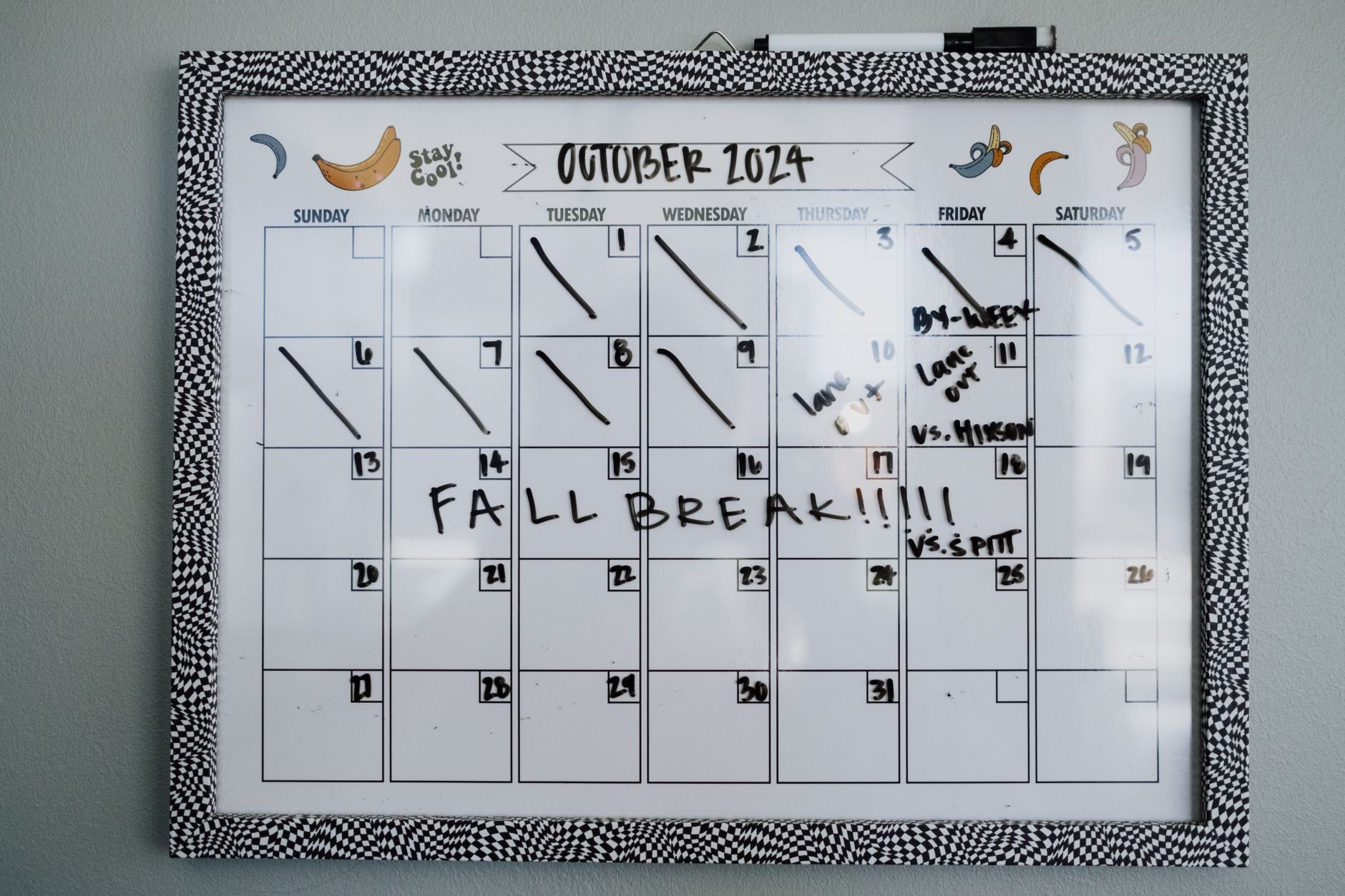
Check the places where obligations tend to appear.
That might mean backpacks, the school app, team messages, email, or a paper calendar on the refrigerator.
Ask simple questions:
- Is anything due?
- Is there a special school day?
- Does anyone need to be somewhere at an unusual time?
- Is there something a child needs to bring?
This is a scan, not an archaeological dig. If an information source takes 20 minutes to review, deal with that separately.
3. Identify forms and supplies
Pull out the concrete things that need action.
Examples include:
- permission slip
- library book
- sports uniform
- birthday gift
- packed lunch
- instrument
- costume
- refill of a routine household item
- something that needs to be washed or charged
Turn vague reminders into visible tasks. “Field trip” is less useful than “Sign field-trip form by Wednesday; Maya owns it.”
4. Assign a clear owner
For every task or unusual pickup, name one person who owns it.
Ownership means that person is responsible for making sure it happens. It does not mean they must personally perform every physical step.
Instead of:
“Someone needs to pick Sam up early Thursday.”
Use:
“Jordan owns Thursday pickup.”
Instead of:
“We need snacks for Saturday.”
Use:
“Alex owns team snacks.”
This prevents both caregivers from assuming the other person has it covered.
It also helps avoid making one caregiver the permanent dispatcher who remembers everything and delegates every task. Either person can own a task from beginning to end.
5. Flag conflicts now
Look for collisions while both people are present.
If one caregiver has a late meeting on the same evening as practice, decide the workaround now. If two children need pickups at the same time, identify the problem before Thursday afternoon.
Not every conflict needs an elaborate solution. Sometimes the answer is simply, “I can do that one if you handle Friday.”
6. Record only what needs to stay visible
Do not create minutes from the meeting.
Put appointments in the shared calendar. Put a task in the shared task list. Put a paper that must leave the house by the door if that is what works.
If something has been assigned and everyone will remember it, you may not need to record it at all.
The system should reduce mental load, not create a second administrative job.
A sample 10-minute reset
Here is what a real handoff might sound like:
Minute 0–2: “Anything unusual this week? I’m late Tuesday. You have the dentist Thursday. School is closed Friday.”
Minute 2–4: “Soccer Wednesday and Saturday. There’s a library book due Thursday and picture day Wednesday.”
Minute 4–6: “We need the picture form and a clean uniform. I’ll own the form; you own the uniform.”
Minute 6–8: “Tuesday is the conflict. Can you do pickup? Great. I’ll do Wednesday practice.”
Minute 8–10: Add the changed pickups to the calendar, put the form beside the keys, done.
If you finish in six minutes, stop in six minutes.
Avoid the default-manager trap

A logistics handoff works poorly if one caregiver arrives with the complete plan and spends 10 minutes assigning jobs to the other.
Try to share the scanning as well as the doing.
One person can check the calendar while the other checks school messages. Alternate who starts the weekly handoff. Let each caregiver bring forward the obligations they know about.
If one person naturally has access to more information—perhaps school messages go to their account—make that information visible rather than turning that person into the permanent memory system.
The aim is shared awareness and explicit ownership, not perfectly equal numbers of tasks.
If you skip the meeting
You will skip it sometimes. Do not turn one missed handoff into a reason to abandon the system.
Use a two-minute emergency reset:
- Look at the next 48 hours.
- Identify anything unusual.
- Assign pickups and urgent tasks.
- Put the next regular handoff back on the calendar.
You do not need to reconstruct the entire week.
If several weeks get missed, restart with the same agenda. There is no backlog to complete. The handoff only needs to make the future visible.
Keep it deliberately small
A weekly logistics handoff is not supposed to solve every household problem.
If a larger disagreement comes up—finances, division of labor, discipline, holiday plans—note it and give it a separate conversation. Otherwise the 10-minute reset will quickly become a meeting nobody wants to attend.
The useful version is almost boring: scan, surface, identify, assign, flag, record.
Ten minutes of shared visibility can be enough to prevent a surprising amount of “I thought you were doing that.”