

Toddlers
Is School Tomorrow? Choose the Smallest Picture Calendar That Answers the Question
Before building a full weekly chart, match the visual horizon to the question your child keeps asking: what happens next, is school tomorrow, or what kind of week is this/
Preschoolers sometimes keep asking the same future-facing question: What happens next? Is school tomorrow? When is Grandma coming?
Before you build a full weekly chart, identify the question your child is trying to answer. Then make the smallest visible map that answers that question.
That may be a two-card “now/next” board, a short rolling strip that shows today and the next few days, or a full seven-day overview. Start small. Expand only when your child repeatedly asks for information the current view cannot show.
Match the visual horizon to the question
| The question you keep hearing | Start with | Show |
|---|---|---|
| “What happens next?” | A now/next board | The current activity and the next one |
| “Is school tomorrow?” | A rolling 3–4 day strip | Today, tomorrow, and one or two days after that |
| “What kind of week is this?” | A seven-day overview | One or two meaningful events per day |
The number of boxes is not a developmental rule. It is a practical starting experiment.
A family asking “what happens next?” may not need a week at all. A child who mainly asks whether tomorrow is a school day may get more useful information from Today → Tomorrow → Next → Next than from a crowded calendar. A seven-day view makes sense when the child is genuinely trying to understand the shape of the week.
Expansion rule: add more horizon only when the child repeatedly asks a question the current board cannot answer.
This is an orientation tool, not a compliance chart
A picture calendar answers:
- What is happening?
- What comes after this?
- Is tomorrow a school day or a home day?
- When is the visit or activity?
It does not need to track whether your child completed tasks, earned rewards, or behaved correctly.
Keeping those purposes separate matters. A board meant to help a child see the plan can stay simple and neutral. It does not need check marks, consequences, or a long list of adult expectations.
Build the smallest useful version
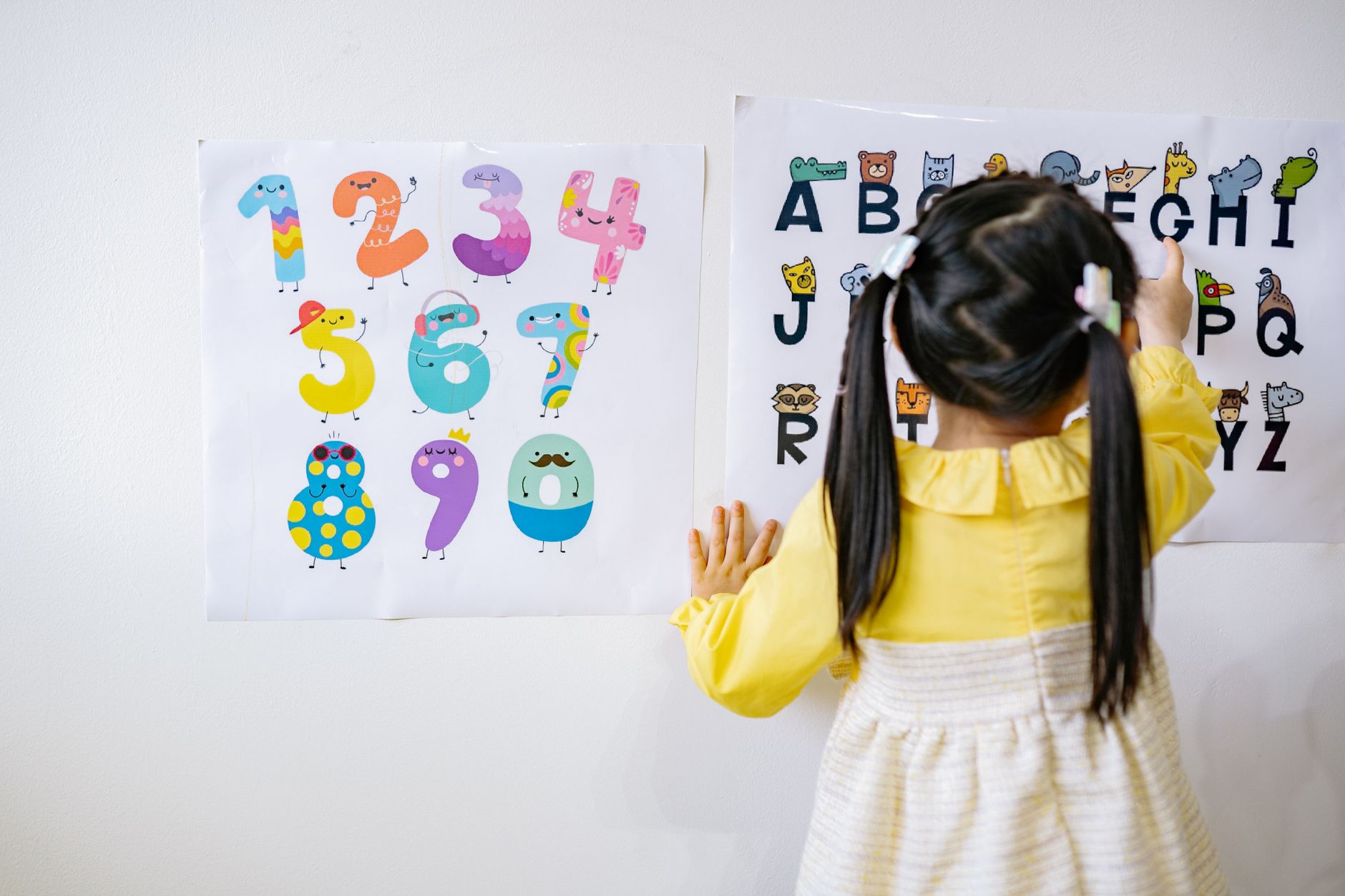
You can test the idea with paper, index cards, magnets, sticky notes, or a small whiteboard.
Use pictures your child recognizes. Those might be:
- a backpack for preschool;
- a house for a home day;
- a familiar face or photo for a visit;
- a ball for a regular activity;
- a plate for dinner with relatives;
- a simple drawing that already has meaning in your family.
The pictures do not need to be polished. The useful question is whether your child can connect the symbol with the plan.
Add one marker for today or now: a clip, magnet, coin, arrow, or sticky note.
If you are testing a short rolling strip, the whole setup can be four boxes:
Today → Tomorrow → Next → Next
Put one meaningful picture in each box. Leave the adult calendar somewhere else.
Use one brief look-ahead moment
Choose one ordinary moment to check the board together, such as breakfast or bedtime.
Keep it short:
- Point to today.
- Name the main plan.
- Point to tomorrow.
- Move the marker when the day changes.
You might say:
“Today is a home day. Tomorrow is a preschool day. After we sleep, we move the clip here.”
If the question returns later, you can answer and point back to the board:
“Yes, preschool is tomorrow. Show me where it is.”
The realistic goal is not to eliminate every repeated question. The board gives the family a visible reference to return to.
Design for changed plans from the beginning

A calendar should show the current plan, not promise that nothing will change.
Removable cards make this easier. Use magnets, sticky notes, loose picture tiles, or Velcro-backed cards rather than treating the first version as permanent.
Try the phrase:
“The plan changed. We thought Grandma was coming tomorrow, but now she is coming on Saturday. Let’s move her picture.”
A worked example:
- Before: Friday shows Grandma; Saturday shows Home.
- After the call: move Grandma to Saturday and replace Friday with Home.
- What you say: “The plan changed. Grandma is still coming, just on a different day.”
This makes flexibility visible. You are not pretending the original board was a guarantee, and you are not abandoning the tool because real life changed.
What to notice during the first week
Do not judge the idea by whether your child stops asking questions.
Instead, notice:
- Does your child look at the board when you mention tomorrow?
- Which questions can the current view answer?
- Which questions still require information that is not shown?
- Are any pictures confusing?
- Is the board simple enough that an adult will keep it current?
Let those observations guide the next change.
If your child only asks about school days, keep the board focused on school and home. If they begin asking who is doing pickup, add that information. If they start asking about the weekend while it is still several days away, a seven-day view may become useful.
Do not add detail simply because the board has empty space.
What the evidence does—and does not—show

The CDC’s general parenting guidance supports simple, predictable routines that fit a young child’s capabilities, along with calmly explaining changes: https://www.cdc.gov/parenting-toddlers/structure-rules/index.html
That guidance does not establish that a particular picture calendar will reduce repeated questions, anxiety, meltdowns, or conflict.
Much of the research located on visual schedules concerns autistic children in classroom or clinical transition settings. A 2025 review noted that visual schedules were often bundled with other intervention components, making their independent effect difficult to establish: https://onlinelibrary.wiley.com/doi/10.1002/bin.70028
A small study of transition-related problem behavior also found that visual schedules alone were not sufficient in the two children studied: https://pmc.ncbi.nlm.nih.gov/articles/PMC2695333/
So the question-to-horizon model in this article is an editorial decision framework, not a research-established treatment or developmental rule. Use it as a low-cost way to test what information is useful in your own family.
A 10-minute version to try tonight
- Write the recurring question at the top of a page.
- Choose the smallest horizon that can answer it.
- Draw two, four, or seven boxes.
- Add only the pictures needed for that horizon.
- Mark today or now.
- Decide when you will look at it together.
- Make at least one card removable so plan changes are easy to show.
Then use it for several days.
If the board answers the question, keep it small. If your child repeatedly asks for something just beyond the visible horizon, add only that next layer.
The point is not to build a perfect family calendar. It is to make the next piece of time easier to see.