
Kids
How to Share School-Lunch Prep Without Making More Work
A simple way to give kids a growing role in packing school lunches without turning every evening into a negotiation.
How to Share School-Lunch Prep Without Making More Work
Teaching a child to help with school lunch sounds simple until “helping” creates three extra decisions, a longer bedtime routine, and a kitchen that still needs to be cleaned. The goal does not have to be handing over the whole lunchbox at once. A better target is small, repeatable responsibility.
The easiest way to get there is to make lunch packing predictable. Give your child a few bounded choices, use the same basic packing formula most days, and transfer one task at a time.
Start with a packing formula
Instead of asking, “What do you want for lunch tomorrow?” give the lunchbox a familiar structure. Your family’s version might be:
- one main item
- one fruit or vegetable
- one side or snack
- one drink, if needed
The exact categories matter less than having a pattern everyone understands. A formula reduces the number of decisions you and your child need to make.
You can also create a short list of realistic options in each category. For example, the “fruit or vegetable” choice might be apple slices, a pear, cucumber, or whatever you routinely keep at home. This is not about creating a perfect lunch menu. It is about making the ordinary task easier to repeat.
Offer bounded choices
Children can participate without being responsible for inventing lunch from scratch.
Try questions such as:
- “Apple or pear?”
- “Crackers or pretzels?”
- “Do you want the sandwich or the leftover pasta?”
Two or three workable choices are usually enough. Everything you offer should be something you are genuinely willing and able to pack.
If your child starts requesting options that are not available, you do not need to open a negotiation. A calm “Those are the choices tonight” keeps the task contained.
Give them one real job
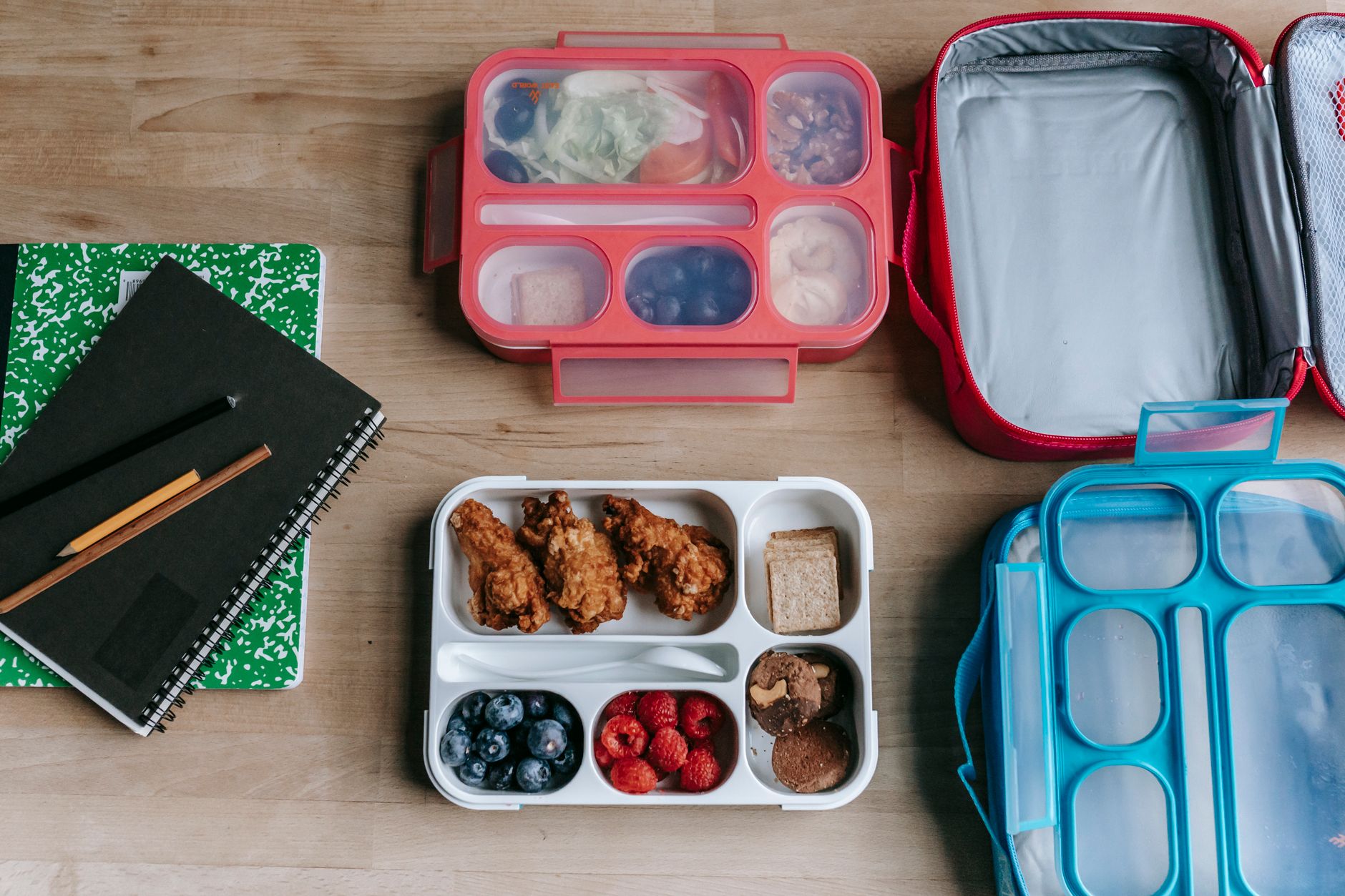
Choose a task your child can do with little supervision. Depending on age, ability, and your kitchen setup, that could be:
- putting a napkin in the lunchbox
- choosing and adding a packaged side
- washing a piece of fruit
- filling a water bottle
- putting reusable containers next to the lunchbox
- placing the finished lunch in the refrigerator
A younger child might only make one choice and place one item in the bag. An older child might assemble several components.
The useful question is not, “What should a child this age be able to do?” It is, “What can my child reliably do in our home without creating a second job for me?”
Keep the task in the evening
School mornings already have deadlines. If you are trying to build independence, the evening usually gives you more room for a child to move slowly, forget a step, or need a reminder.
Pick a natural point in your existing routine: after dinner, before screen time, or while the kitchen is already being tidied. Keep the lunch task short.
A simple evening sequence might be:
- Choose tomorrow’s fruit.
- Add the side item.
- Put the lunchbox on the counter for the adult to finish.
That is enough to establish participation.
Transfer responsibility gradually
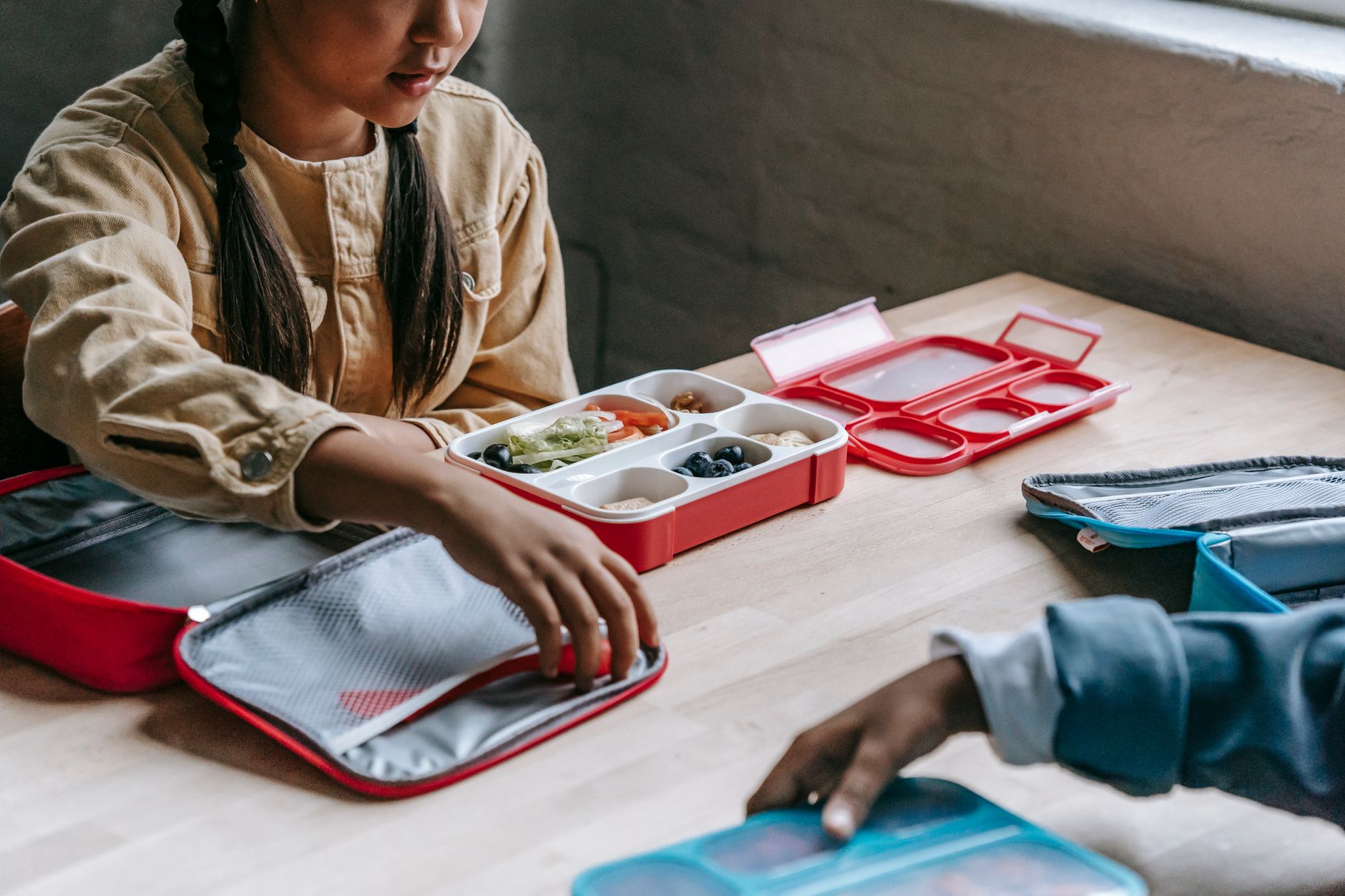
Once a task is easy and routine, add another. For example:
Stage 1: Child chooses the fruit.
Stage 2: Child chooses and packs the fruit and side.
Stage 3: Child packs those items and fills the water bottle.
Stage 4: Child follows the whole packing formula, with an adult checking that the lunch is complete.
There is no deadline for moving through these stages. If adding a step suddenly turns lunch prep into a nightly conflict, return to the last version that worked.
Independence grows from successful repetition, not from making the task difficult enough to prove a point.
Make the environment do some of the reminding
A little setup can reduce how much verbal prompting you need.
Keep lunchboxes in the same place. If possible, store common lunch items where your child can reach them. Put the simple packing formula on a small card inside a cupboard door or near the lunch supplies.
Then your reminder can become, “Check the lunch card,” rather than a running series of instructions.
What if your child does not want to help?
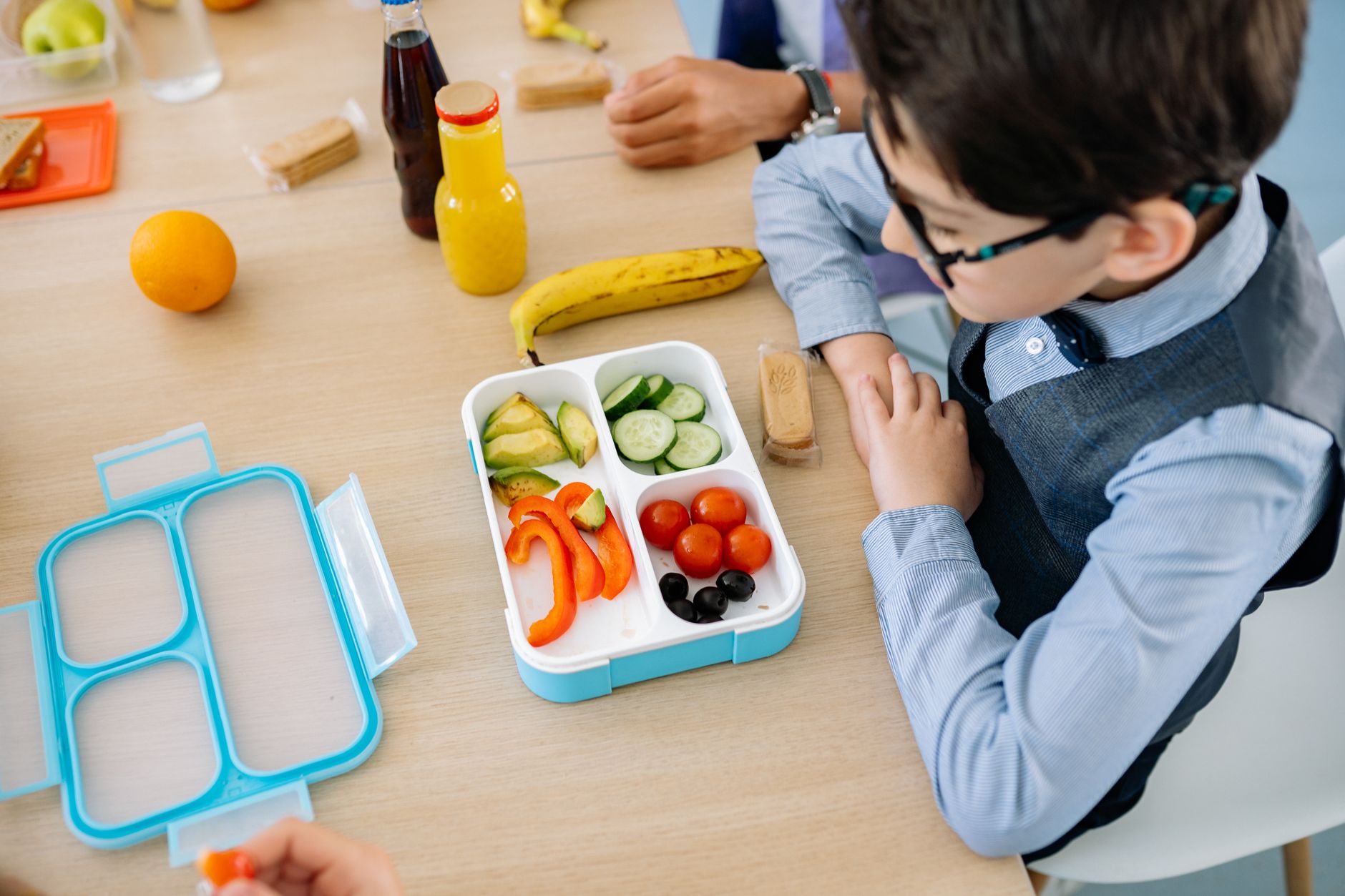
Participation does not need to become a nightly battle. Keep the expectation small and matter-of-fact.
You might say, “Your lunch job is choosing the fruit and putting it in the lunchbox.” Then move on when the job is done.
If your child is tired or the evening has gone sideways, it is also reasonable to help more. A routine can be consistent without being rigid. One difficult evening does not erase the skill you are building.
Aim for useful independence
The point of sharing lunch preparation is not to get a child to perform an adult task perfectly. It is to let them practice noticing what needs to happen, making manageable choices, and completing a small responsibility that matters to their day.
Start with the tiniest piece that genuinely helps. Repeat it until it feels ordinary. Then hand over a little more.
That is often how independence becomes sustainable: not through one big transfer of responsibility, but through dozens of small evenings when a child learns, “This part is mine, and I know what to do.”