

Toddlers
When Your Preschooler Wants You to Play All Day: Building Independent Play in Tiny Steps
Independent play does not have to begin with a long stretch alone. Try a gradual handoff that starts with connection, a simple activity, and a short return you can reliably keep.
When Your Preschooler Wants You to Play All Day: Building Independent Play in Tiny Steps
“Play with me!”
You sit down with the blocks. Five minutes later you stand up to make lunch.
“Don’t go! Play with me!”
If your preschooler seems to want a parent involved in every minute of play, it can be exhausting—especially when you also need to cook, answer a message, help another child, or simply sit down.
Independent play is not an all-or-nothing ability. A child who currently wants constant company does not need to jump straight to entertaining themselves for an hour.
Think in tiny handoffs.
Step 1: Connect before you step away
When possible, begin with a short period of genuine attention.
You might say:
“I can play trains with you for five minutes. Then I’m going to make lunch while you keep playing.”
For those few minutes, join the game. Help build the track. Make the toy dinosaur roar. Draw beside them.
This is different from half-playing while repeatedly trying to escape. You are giving the child a small, predictable dose of connection and also telling them what comes next.
You do not need to promise a long session. Choose an amount you can actually give.
Step 2: Help the play get started
“Go play by yourself” is a surprisingly complicated instruction. A child has to decide what to do, gather materials, invent an idea, and sustain it.
Make the beginning easier.
Instead of leaving a pile of blocks, start a tiny problem:
“Let’s build a garage for these two cars.”
Instead of handing over paper, draw the first silly shape:
“I made an alien head. What should its body look like?”
Instead of saying, “Play with your animals,” begin a scene:
“The bear is hungry, but there’s no food in the house.”
You are providing ignition, not directing the whole game.
Once your child is engaged, move to the next step.
Step 3: Announce a short nearby interval
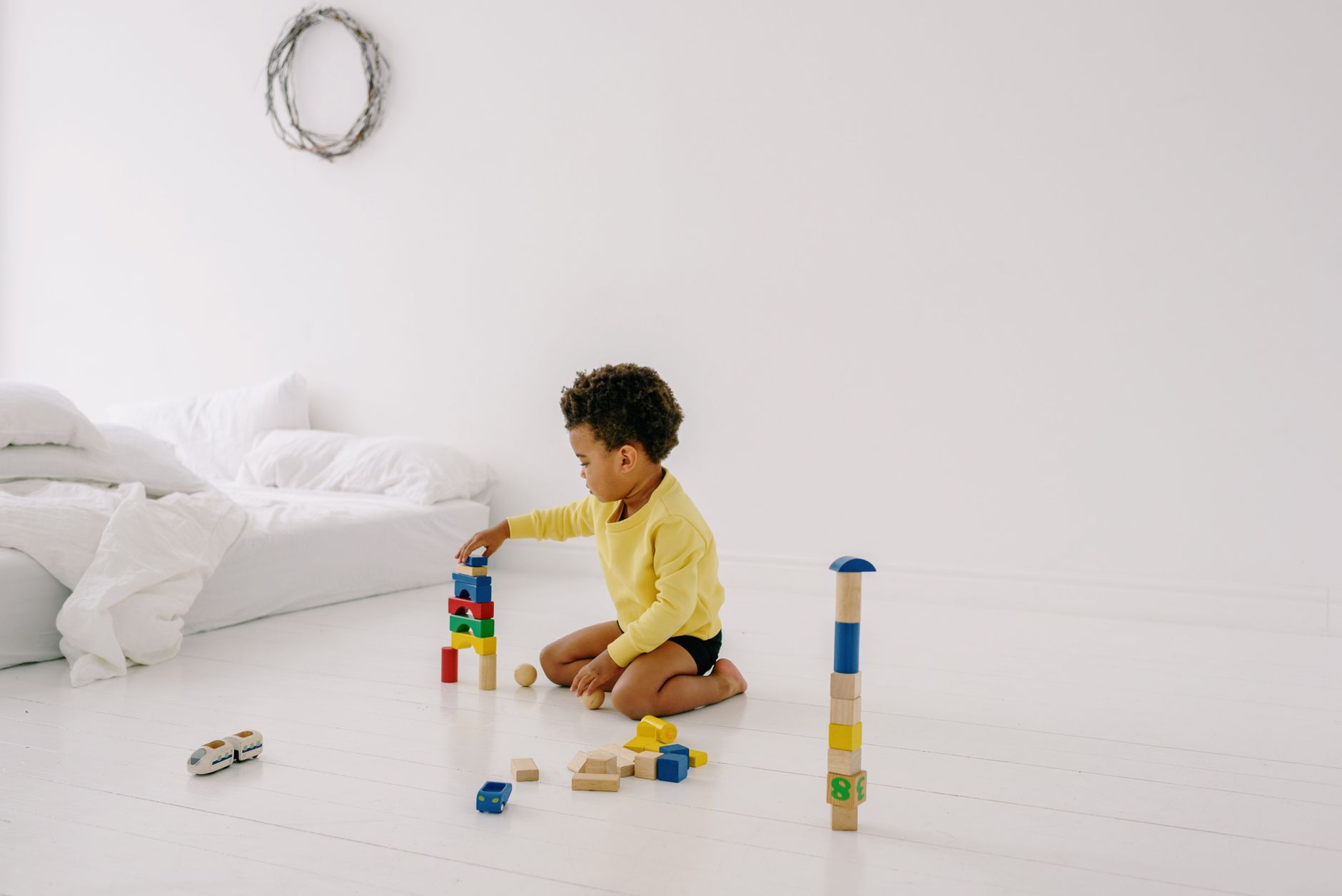
At first, “independent” does not need to mean alone in another room.
You might fold laundry at the table while your child plays on the floor. You might prepare food while they use play dough nearby.
Be concrete:
“I’m going to put the dishes away. You keep building. I’ll come see your garage when I’m done.”
For a child who is new to this, start with an interval that feels almost too easy. A few minutes of successful solo play is more useful than setting an ambitious target that ends in distress.
Step 4: Return when you said you would
This part matters.
If you say, “I’ll come back after I put the laundry in the washer,” come back when that task is finished.
You do not need to stay for another long play session. You might kneel down, notice what changed, and say:
“You added a roof! I’m going to finish folding now. Want to keep going?”
Returning makes your departure predictable. Over time, your child gets repeated experiences of: my parent steps away, I play, and my parent comes back.
Step 5: Lengthen slowly
If five minutes is going comfortably, try six or seven—not thirty.
There is no prize for reaching a particular duration quickly. Some days your child may play independently longer than usual. Other days they may want much more closeness.
Tiredness, transitions, hunger, illness, a difficult day, or simply temperament can change how much separation feels comfortable.
Treat the duration as flexible.
Make the environment easy to enter
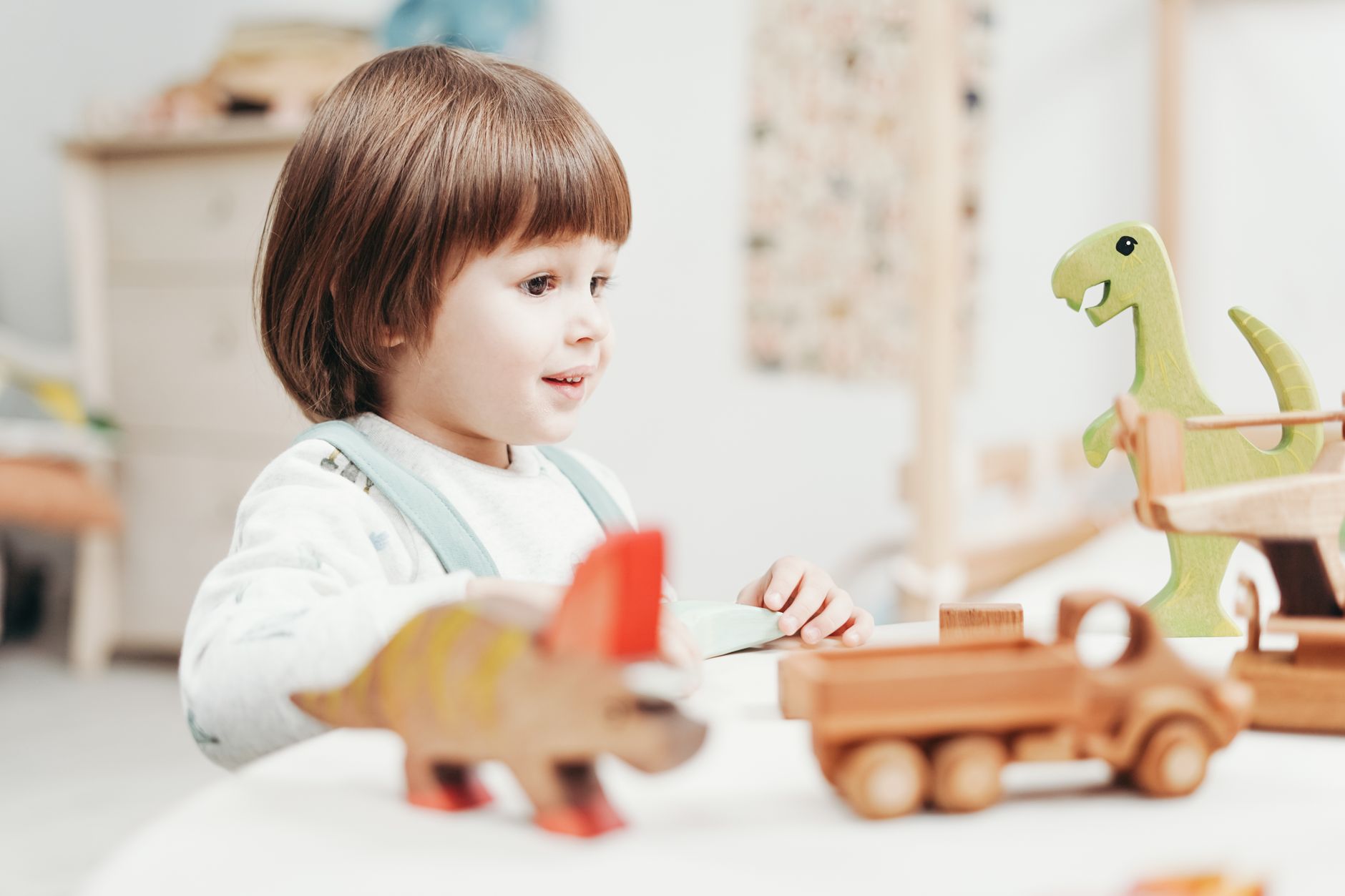
Too many choices can make getting started harder.
You do not need an elaborate playroom. A small selection of visible, accessible materials can be enough.
Possibilities include:
- blocks or magnetic building pieces
- a few toy animals or figures
- cars and a simple roadway
- paper and washable drawing materials
- play dough with a few tools
- a small pretend-food setup
- simple puzzles
- reusable stickers
- cardboard boxes or containers for open-ended play
Keep safety and your child’s developmental abilities in mind when choosing materials, particularly with small pieces.
A small rotation can also help. Put some toys away and occasionally swap them. The goal is not constant novelty; it is making the available choices manageable and easy to start.
Give fewer instructions once the play begins
Independent play is harder to practice if an adult continues managing it from across the room.
If the blue block is apparently a sandwich, it can be a sandwich.
If every stuffed animal is sleeping in a cardboard box, the game does not need improving.
Try comments rather than directions:
“You found a place for all of them.”
“That tower got tall.”
“You’ve been working on that for a while.”
Then return to what you were doing.
What to say when your child protests
Your child may follow you immediately.
“You have to play!”
“I don’t want to play alone!”
Try acknowledging the feeling without changing the plan every time:
“You want me to stay and play. I’m making lunch now. You can bring the animals into the kitchen and play near me.”
Or:
“You wish I would keep building. I’ll come back after I put these clothes away.”
If they are genuinely overwhelmed, you can shorten the interval or reconnect. This is practice, not a test of willpower.
You can also offer a limited choice:
“Do you want to keep drawing here while I cook, or bring your paper to the kitchen table?”
The boundary remains—you are doing your task—but your child has some control over how to stay nearby.
Expect interruptions
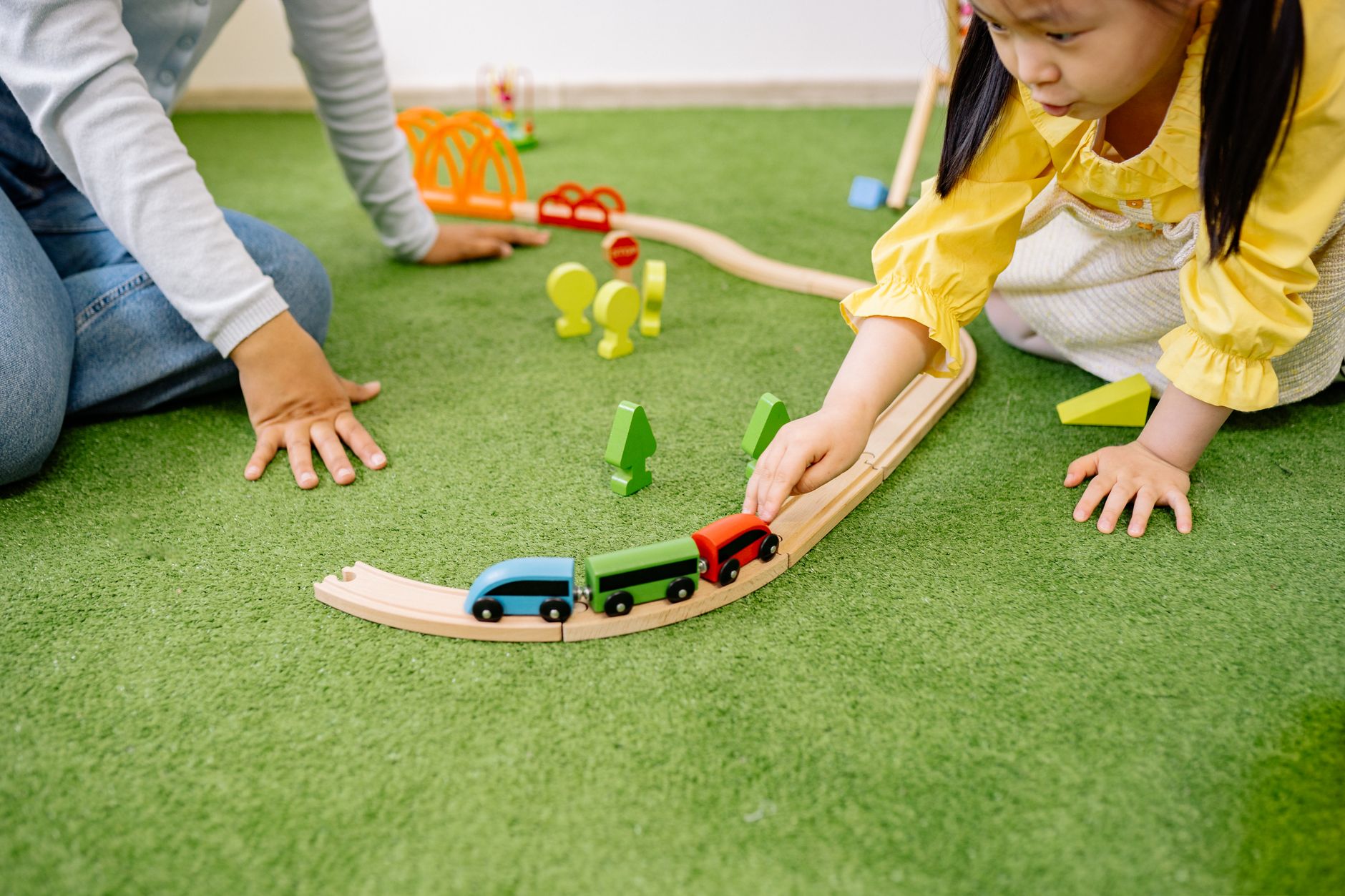
A preschooler learning independent play may call for you repeatedly.
“Look at this!”
“Where does this go?”
“Can you make the horse talk?”
You do not have to ignore them completely. Brief responses can coexist with independent play.
“I see it!”
“You can decide where it goes.”
“I’m cooking right now. You can make the horse talk.”
The skill you are building is not total silence or total separation. It is the ability to carry some of the play forward without an adult continuously generating it.
Avoid making independent play feel like rejection
Try not to frame solo play as something your child must do because they are bothering you.
There is a meaningful difference between:
“Go away and play. I’m busy.”
and:
“I loved building with you. Now I’m going to do my work, and you can keep building right here.”
Parents are allowed to be unavailable. You do not need to disguise that fact. A warm, clear boundary is enough.
Notice small progress
Success might initially look like your child playing for three minutes while you remain in sight.
Later it might be ten minutes.
Then perhaps one afternoon you realize they have been absorbed in a pretend game and have not asked you to join for quite a while.
There may still be days when they want you constantly.
Independent play is a skill, not a personality test. Building it gradually allows you to protect both things your family needs: your child’s desire for connection and your need to sometimes do something else.
Start with a little connection, make the activity easy to enter, step away for a manageable interval, and come back when promised.
Then repeat—one tiny handoff at a time.