

Kids
How to Help With Homework Without Taking Over
When homework becomes tense, a clear parent role can help: create workable conditions, clarify the task, offer bounded support, and return ownership to your child.
How to Help With Homework Without Taking Over
Homework can become surprisingly tense. A child gets stuck, a parent tries to help, and within minutes the parent is explaining, correcting, prompting, and perhaps doing more of the thinking than anyone intended.
A calmer approach starts with a simple distinction: your job is to support the conditions for doing the work; the homework still belongs to your child.
That can mean helping them understand what the assignment asks, getting started, or breaking a confusing task into manageable steps. It does not require supplying answers, rewriting their work, or ensuring that every page goes back to school perfect.
Define your role before things get tense
It is easier to set boundaries before both of you are frustrated.
A useful parent role might include:
- helping create a reasonably workable place and time to begin;
- reading the assignment directions together;
- asking questions that help your child identify the next step;
- providing limited assistance with a specific obstacle;
- helping them decide what to do when they genuinely cannot proceed;
- returning responsibility for the work to them.
This changes the goal from “make sure the homework is correct” to “help my child engage with the assignment as independently as they reasonably can.”
Use a short routine when your child gets stuck
When you hear “I can’t do this,” resist the urge to immediately explain the whole problem. Try a brief routine instead.
1. Find the exact sticking point
Ask: “What part makes sense, and where do you get stuck?”
Sometimes the whole assignment feels impossible because one direction is unclear.
2. Restate the task

Have your child explain what they think they are being asked to do. If needed, read the directions together. Keep your help focused on understanding the task rather than solving it.
3. Identify one next action
Ask: “What is the smallest thing you could do next?”
That might be writing the heading, answering the first question, finding the relevant page, or making a rough first attempt.
4. Offer bounded help
Be specific about what you will do: “I can sit with you while you start the first one,” or “I can help you think through this example, and then you try the next one.”
5. Step back
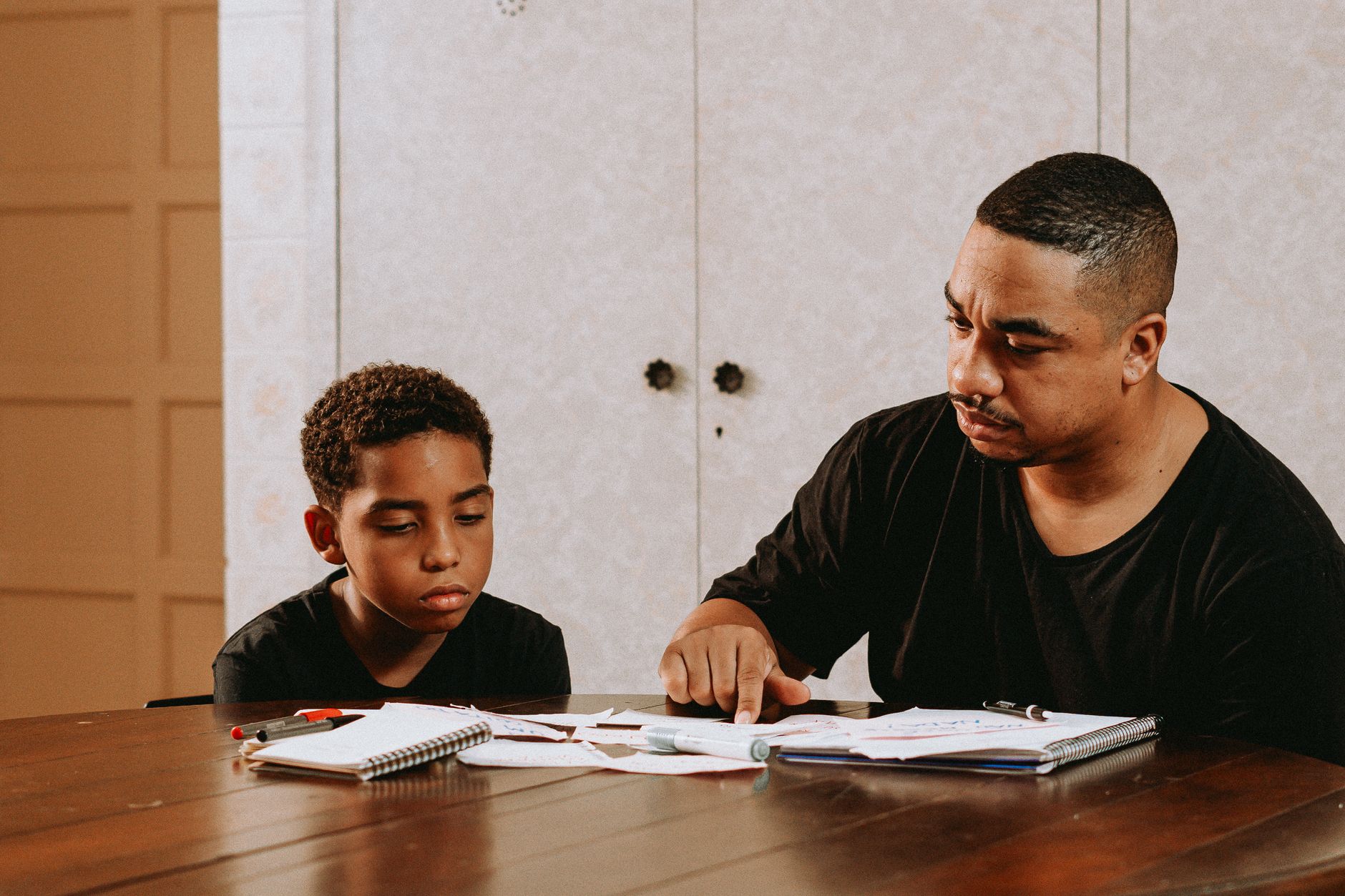
Once your child has momentum, return ownership: “You’ve got the next step. I’ll be nearby if you need me.”
The routine does not guarantee that homework becomes easy. It simply keeps help from automatically turning into takeover.
What to say when your child wants the answer
Children sometimes ask directly for an answer, especially when they are tired or frustrated. You can decline without turning the moment into a lecture.
Try language such as:
- “I’ll help you figure out what the question is asking, but I’m not going to give you the answer.”
- “Show me what you’ve tried so far, and we can look at where you got stuck.”
- “I can give you a hint, then you take it from there.”
- “I don’t want to redo this for you. I can help you decide what you want to change.”
If your child submits work with an imperfect answer, that may provide their teacher with more useful information than a parent-corrected page would.
Avoid the perfection trap
It is tempting to fix spelling, improve sentences, redo a messy diagram, or point out every mistake. But if the finished product reflects the parent’s standards more than the child’s current work, ownership has shifted.
Before correcting something, ask yourself: Does my child need this help to understand the task, or do I want the assignment to look better?
You can still encourage a quick review: “Would you like to check your work once before you finish?” If they say yes, let them lead the review where possible.
When an argument is going nowhere

Sometimes neither of you is learning anything anymore. Voices rise, the same points repeat, and homework becomes a contest.
At that point, ending the argument can be more useful than winning it.
You might say: “We’re both getting frustrated. We’re going to stop for ten minutes and come back calmer.” Or, if the evening has reached its limit: “This isn’t productive anymore. Let’s stop and decide what needs to happen next.”
A pause is not the same as pretending the assignment does not exist. Afterward, return to the practical question: What can your child reasonably do now? Is there a part they can complete independently? Is the remaining difficulty something the teacher needs to know about?
Keep the post-argument conversation short. You do not need to conduct a full analysis of everyone’s behavior before returning to the task.
Know when the teacher needs to be part of the solution
Ordinary homework frustration can often be handled with routines and clearer boundaries at home. But some problems cannot be solved by better parental coaching.
Consider contacting the teacher when the assignment directions remain unclear, the workload regularly seems unmanageable for your child, your child repeatedly cannot begin or complete the work despite reasonable support, or you are unsure how much help the teacher expects families to provide.
You do not need to diagnose the reason. Describe what you observe: how long the work is taking, where your child gets stuck, what kind of help you have tried, and what happens when you step back.
School expectations differ, so the teacher is the right person to clarify the purpose of a particular assignment and what support is appropriate.
Aim for supported independence
The most useful homework help often feels less active than taking over. You create the conditions, clarify the problem, help with a limited obstacle, and then move back.
Your child may still struggle. The page may still contain mistakes. The evening may still occasionally go badly.
But the central message stays clear: I will help you when you are stuck, and I also trust that this work is yours to do.